|
Getting your Trinity Audio player ready... |
Table of Contents
- 1 What is the Purpose of a Safety Net?
- 2 Key Types of Safety Nets in Construction
- 3 Why Safety Nets are Non-Negotiable on Modern Sites
- 4 Conclusion
- 5 FAQs
- 5.1 1. What is the main purpose of a safety net on a construction site?
- 5.2 2. What are the main types of safety nets used?
- 5.3 3. Why are safety nets critical for high-rise building construction?
- 5.4 4. How does a fall protection safety net work?
- 5.5 5. What is included in a construction safety netting system?
- 5.6 6. How many types of safety nets are used in construction?
- 5.7 7. What are safety nets designed to do?
- 5.8 8. What is the difference between a debris net and a fall arrest net?
- 5.9 9. What standard governs safety nets in construction?
- 5.10 10. What is the minimum breaking strength of safety net border ropes?
- 5.11 11. What material are construction safety nets made from?
- 5.12 12. Are safety nets used in residential construction?
- 5.13 13. Can safety nets replace personal fall arrest systems such as harnesses?
- 5.14 14. Where should safety nets be installed on a construction site?
- 5.15 15. How long can a safety net be used before replacement?
- 5.16 16. What is a safety net system on a construction site?
- 5.17 17. Where can I buy safety nets for construction in India?

It is very important to select the right safety net for your construction site. This ensures that workers get maximum protection with minimal ongoing issues.
Here are the different types of safety nets and their functions:
Type of Safety Net | Primary Installation Method | Best Used For | Key Characteristics |
Personal Fall Arrest Nets | Installed horizontally directly below the work area. | General overhead work, interior atrium, and bridge construction. | Designed to catch an individual using energy absorption. |
Debris Containment Nets | Installed vertically or as overhead canopies. | High-rise building facades, scaffolding, and areas below active work. | Stops falling tools, materials, and small debris. Protects people and property below. |
System Nets | Integrated into a proprietary cable or frame system. | Large, open areas on high-rise building projects and complex structures. | Pre-engineered systems for large-scale coverage. Mainly used for perimeter protection. |
1. Fall Arrest Safety Nets for Construction
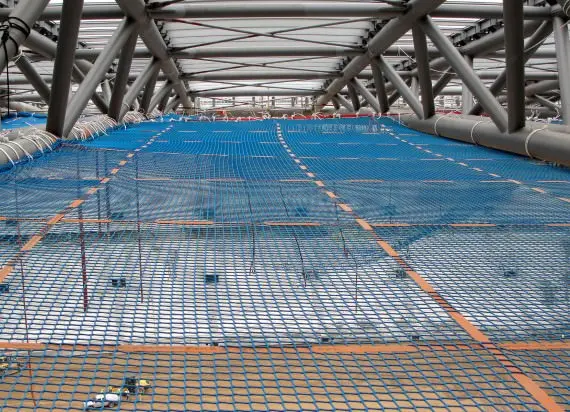
This is the most widely used safety net at construction sites. Installed beneath the working level, it can protect the workers from accidental falls.
Modern fall protection safety nets for construction are designed to absorb the energy caused by a fall. The quality is rigorously tested to global standards such as EN 1263-1 to ensure it withstands this force.
2. Debris Nets
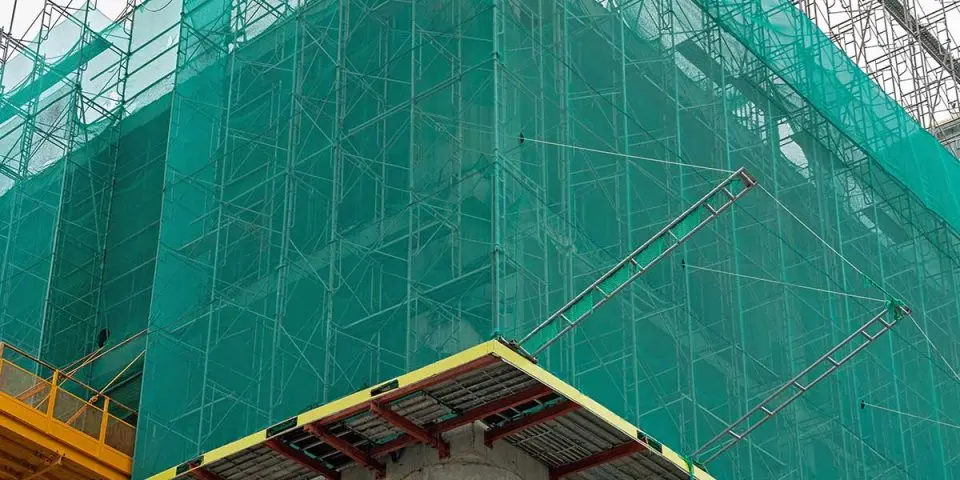
This is a specific type of net with a smaller gap to catch any falling debris or construction tools. Debris Nets can protect both workers and the public standing below.
It is a specialized construction safety netting system that creates a protective curtain around the perimeter.
3. System Nets
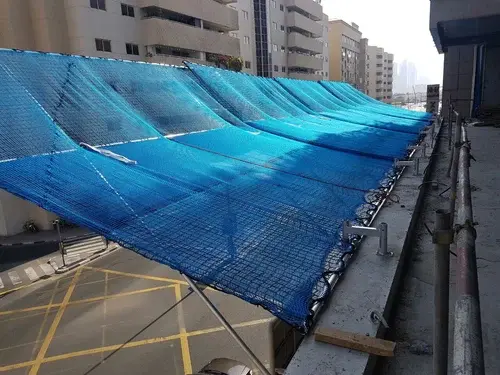
System Nets are advanced engineering solutions that combine high-strength netting with supporting frameworks. This includes cables or arms. Using this support, the nets can cover large areas where traditional net attachments are difficult to use.
System nets are commonly used for high-rise building projects. They can provide extensive overhead protection, preventing injuries and saving lives.
Implementing a proper safety-net construction strategy provides a safer environment. Here are its primary benefits:
Saves Lives and Prevents Injuries
By preventing falls and potential fatalities, safety nets create a more protective environment.
Enhances Worker Productivity
Making workers feel secure helps them focus on their tasks. It gives them better confidence and improved productivity.
Ensures Regulatory Compliance
Regulations like OSHA and WorkSafe are mandatory in many regions. Failure to use safety nets here can incur heavy fines or even work stoppages.
Protects Surrounding Properties
Debris containment nets are essential for protecting pedestrians and the neighborhood. Falling objects without a safety net can cause severe injuries, even outside the construction site.

Conclusion
Safety nets in construction sites are more than just another safety precaution. They represent the company’s commitment to its workforce.
When installed correctly, it can create a more confident environment throughout construction. It is a small investment that protects both people and the company’s reputation against potential lawsuits.
For any project that faces a risk of fall hazards, installing a safety net for building construction is vital.
Ready to make your construction sites better protected? Consult the experts at Indonet today to install a quality-tested safety net for your construction project.
FAQs
1. What is the main purpose of a safety net on a construction site?
The purpose of a safety net is to act as a collective, passive fall protection system. It safely catches a falling worker or debris, preventing fatalities and serious injuries, and is a fundamental safety requirement in building construction.
2. What are the main types of safety nets used?
The primary types of safety nets in construction are fall arrest nets (to catch people), debris containment nets (to catch objects), and system nets (engineered for large areas). Each type is a key part of a complete construction safety netting system.
3. Why are safety nets critical for high-rise building construction?
A safety net for high rise building is essential due to the extreme heights involved. It provides vital fall protection for workers and serves as a crucial debris barrier, protecting people and property below. This makes them non-negotiable for urban projects.
4. How does a fall protection safety net work?
A fall protection safety net for construction is engineered to absorb the energy of a fall. Installed beneath the work area, its mesh and border ropes stretch in a controlled way to safely decelerate a falling person, minimizing the force on their body.
5. What is included in a construction safety netting system?
A complete construction safety netting system includes the nets themselves (fall arrest or debris), along with all support components like attachment points, tie ropes, boundary cables, and sometimes dedicated support structures, all installed to strict safety standards.
6. How many types of safety nets are used in construction?
There are three main types of safety nets used in construction: fall arrest nets (designed to catch a person who falls from height), debris containment nets (designed to catch tools, materials, and falling debris), and system nets (engineered solutions for large or complex high-rise projects). Each type serves a distinct safety function on site.
7. What are safety nets designed to do?
Safety nets are designed to absorb the energy of a falling person or object, decelerate it in a controlled way, and prevent it from striking the ground or workers below. They function as a passive, collective protection system meaning every worker in the protected zone benefits without needing to wear individual safety equipment.
8. What is the difference between a debris net and a fall arrest net?
A debris net has a finer mesh designed to catch small falling objects such as tools, fasteners, and masonry fragments. A fall arrest net has a coarser, energy-absorbing mesh and is engineered to safely catch a falling person. Most modern construction sites use both types together – debris nets vertically around the work face, and fall arrest nets horizontally below the work level.
9. What standard governs safety nets in construction?
The most widely referenced international standard is EN 1263-1, which specifies safety requirements, dimensions, materials, and test methods for personal safety nets used in construction. In India, the National Building Code of India 2016 (Part 7 – Construction Management, Practices and Safety) provides the regulatory framework. OSHA regulations apply in the United States.
10. What is the minimum breaking strength of safety net border ropes?
Under EN 1263-1, safety net border ropes must have a minimum breaking strength of 30 kN (kilonewtons). This ensures the perimeter of the net can withstand the dynamic load of an arrested fall without tearing free from its anchorage. Indonet safety nets are manufactured and tested to meet or exceed this requirement.
11. What material are construction safety nets made from?
Construction safety nets are typically made from high-strength polypropylene or high-density polyethylene (HDPE) monofilament, with UV stabilizers added during extrusion to resist sunlight degradation. The yarns are knotted or knitted into a mesh pattern, with reinforced border ropes around the perimeter.
12. Are safety nets used in residential construction?
Yes. While most commonly associated with commercial high-rise projects, safety nets are increasingly used on residential construction sites – particularly for multi-storey apartments, villas being built in dense urban areas, and any project where workers operate at heights above 3 metres. Local building codes in many Indian cities now require netting for residential builds above four storeys.
13. Can safety nets replace personal fall arrest systems such as harnesses?
No – they complement each other rather than replace each other. Safety nets are a collective protection system that protects the entire work zone passively. Personal fall arrest systems (harnesses, lanyards, anchor points) provide individual protection for a specific worker. Most construction safety plans use both: nets as the primary collective barrier, with harnesses for high-risk individual tasks.
14. Where should safety nets be installed on a construction site?
Fall arrest nets should be installed horizontally as close as practical beneath the work area – typically no more than 6 metres below the working level. Debris nets should be installed vertically around the facade of the building or scaffolding to contain falling objects within the site perimeter.
15. How long can a safety net be used before replacement?
A construction safety net’s usable life depends on UV exposure, mechanical wear, and any fall events it has arrested. Under EN 1263-1, nets must be inspected periodically and replaced if they show damage, UV degradation, or have arrested a fall. Indonet’s safety nets typically remain serviceable for several years under normal Indian site conditions.
16. What is a safety net system on a construction site?
A construction safety net system is a complete, engineered fall-protection assembly that includes the netting itself, border ropes, suspension cables, attachment hooks or carabiners, anchorage points, and any required support framework. System nets are often pre-engineered for specific high-rise applications.
17. Where can I buy safety nets for construction in India?
Indonet Group manufactures and supplies construction safety nets across India and to clients in 10+ countries from ISO 9001:2015-certified units in Waghodiya GIDC, Vadodara, Gujarat. Fall arrest, debris, and system net configurations are available with full test certificates. For project-specific specifications, samples, and quotes, contact the Indonet sales team.