|
Getting your Trinity Audio player ready... |
Table of Contents
- 1 What a Drainage Board Actually Does
- 2 The Dimple Board and How It Moves Water
- 3 How a Drainage Cell and Geocomposite Drainage Board Differ
- 4 Basement Waterproofing From the Outside In
- 5 Retaining Wall Drainage, Done Properly
- 6 What to Check Before You Buy
- 7 Getting the Full System Right
- 8 Frequently Asked Questions
- 8.1 1. What is a drainage board used for?
- 8.2 2. What is the difference between a drainage board and a drainage cell?
- 8.3 3. Does a basement need a drainage board if it already has waterproofing?
- 8.4 4. How is a drainage board fixed to a retaining wall?
- 8.5 5. Which Indian standards apply to basement and foundation drainage?
A drainage board is a bumpy plastic sheet. It goes against a basement or retaining wall, and the bumps keep a thin gap open behind it. Water in the soil drops into that gap, runs off to a drain at the base, and never gets to push on the wall. Lay it over a waterproofing coat and most below-ground leaks never start. This guide walks through how it works, how a dimple board, a drainage cell, and a geocomposite drainage board differ, and what to check before you buy.
Most basement leaks are not a waterproofing problem. They are a pressure problem. Big difference.
Wet soil pushes on the wall. All day, all night, it leans on every joint and crack. And after a couple of monsoons, it gets in.
A drainage board stops that. It gives the water an easy way down to a drain, so it quits fighting the wall. We make these at Indonet, and on both basements and retaining walls, this one layer beats another coat of waterproofing.
What a Drainage Board Actually Does
A drainage board has one job. It pulls the water pressure off the wall. It is not waterproofing. It drains.
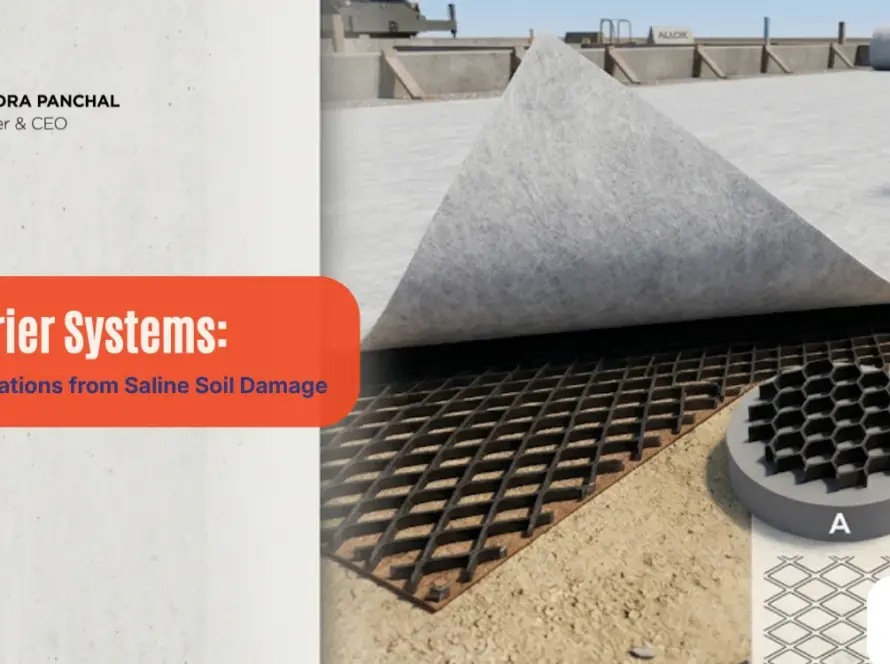
The board is a plastic sheet covered in small bumps, the dimples. They prop it off the wall and leave a gap behind. Water finds that gap and falls to the drain.
Most boards also carry a thin cloth on the soil side, a geotextile. That cloth is the part nobody talks about. It lets water through but keeps the soil out, so the gap never silts up.
Think of it as a one-way lane for water. Dimples keep the lane open. The drain at the bottom is the only way out.
Our Indokon Dimple Board is built like this, for basements and foundations.
Why Waterproofing on Its Own Keeps Failing
Waterproofing blocks water. But it does nothing about the push behind it.
And that push is patient. Leave it there long enough and it finds the one lap or pinhole the applicator missed on a Friday evening. The board clears the water before any of that starts.
So you use both. Never just one.
Layer | What it does | What it cannot do |
Waterproofing | Blocks water | Take off pressure |
Drainage board | Takes off pressure, guards the coat | Block water |
The Dimple Board and How It Moves Water
A dimple board works like the gap behind a rain screen. Water in at the top, out at the bottom. Done.
No pump. No power. Gravity runs the whole thing down the gap on its own.
Same trick as our INDODRAIN Geonets, where the drain core gets wrapped in cloth so it keeps draining even with tonnes of soil pressing on it.
The Path Water Takes to the Drain
Step | Where | What happens |
Collect | Bumpy face + cloth | Water in, soil out |
Carry | Gap behind the bumps | Water falls by gravity |
Let out | Footing or base drain | Water leaves to a sump or daylight |
A board is only half a system. Skip the drain at the base, or let it clog, and the water just sits there. We have dug up old walls where the board was spotless and the footing sat in a pond.
Foundation Drainage Starts at the Footing
Foundation drainage is never the board alone. It is the board plus a drain that carries the water off.
Forget the footing drain and water pools at the base with no way out. Then your perfect board sits in that pool. Board and drain go in together, or neither does its job.
How a Drainage Cell and Geocomposite Drainage Board Differ
Dimple board, drainage cell, geocomposite drainage board. Cousins, built for different jobs. Thickness and location decide which one.
The dimple board is the thin one, for upright walls. A drainage cell is fat and hollow. You lay it flat under podium decks, planters, and green roofs, where it has to store and shift a lot of water.
A geocomposite drainage board glues a drain core to a cloth filter, for buried, muddy ground. For the flat, high-water jobs, our INDODRAIN Geocomposites match a thick core to a filter cut for your soil.
Matching the Board to the Load
Product | Best use | Thickness | Strong point |
Dimple board | Basement, retaining walls | 0.5 to 2 mm | Cheap, easy to fix upright |
Drainage cell | Decks, planters, roofs | 20 to 50 mm | Holds and moves lots of water |
Geocomposite drainage board | Buried walls, muddy soil | 5 to 20 mm | Bonded filter resists clogging |
Buying on thickness alone trips people up constantly. A board made for a house wall gets crushed flat under a podium slab. And a crushed board drains nothing at all.
Basement Waterproofing From the Outside In
On a basement, the drainage board does two jobs at once. It guards the waterproofing and it drains the soil. Outside face, over the coat, before backfill.
It takes the hits from stones and rough fill while the soil goes back in. That is the exact moment most waterproofing gets torn, and nobody sees it happen. IS 3067 puts this outside drainage layer inside good damp-proofing practice, and IS 456 covers the concrete wall behind it.
Layer | Why it is there |
RCC wall | The structure, per IS 456 |
Waterproofing | The water barrier |
Drainage board | Guard and pressure relief |
Filter cloth | Keeps backfill fines out |
Backfill | Packed soil |
Where a Basement Drainage Membrane Falls Short
Here is a trap. The words basement drainage membrane cover two very different products.
One is a flat sheet, pressed tight to the wall. The other is a bumpy board that holds a gap. Only the second one drains.
A flat sheet with no gap just traps the water it was meant to move. So when a drawing says basement drainage membrane and gives no gap or flow figure, stop and ask what it means. Before anything gets buried.
Retaining Wall Drainage, Done Properly
Behind a retaining wall, drainage is a safety job, not a finish. Trapped water adds weight the wall was never built to carry.
That weight is what bows and cracks walls years down the line. A drained back keeps the wall doing its actual job. You fix the board to the back before backfill, bumps to the wall, with weep holes or a base drain to let the water escape.
Height makes it worse fast. A wall holding back four or five meters of saturated soil carries a water load that keeps climbing with depth, which is exactly why a taller wall is so much less forgiving of a missing drain.
Mistake | What you get | The fix |
No drainage layer | Full water load on the wall | Board behind the wall |
Blocked weep holes | Water backs up | Wrap the base drain in cloth |
No filter | Gap silts and stops | Cloth-faced board |
The Three Mistakes That Sink Retaining Walls
Nearly every failed wall I see traces to one of those three rows. None costs much to avoid while you are still building.
The bill lands later. Much later, when the fix means digging the whole wall back out. On a tall wall, or in muddy soil, go with a cloth-faced board and a solid base drain for the retaining wall drainage.
What to Check Before You Buy
Four numbers tell you if a drainage board lasts in the ground: crush strength, water flow, core thickness, filter hole size. Match them to the burial depth and the soil. Not the price.
Crush strength matters most where it sits deep or flat, with soil and traffic bearing down on the core. Water flow tells you how much the gap shifts at your slope. The filter holes are the fussy bit, matched to the soil so they neither clog nor let fines through.
Property | Why it matters | Ask for |
Crush strength (compressive) | Holds the gap open under load | kPa or psf value |
Water flow | Sets how much it drains | Flow at your slope |
Core thickness | Sets the gap size | Thickness in mm |
Filter hole size | Stops clogging | Hole size matched to soil |
Reading the Spec Sheet
Ask for test numbers, against a named test, not one headline figure. A board with no crush rating is a guess. And you cannot dig up a guess cheaply once it is in the ground.
Say it is a four-meter basement wall in clay. You want a crush strength that holds the gap open under all that soil, plus filter holes fine enough to keep the clay out without blocking flow. Those two numbers beat the thickness printed on the front of the sheet, every time.
Getting the Full System Right
A drainage board is only as good as the drain it feeds and the filter that keeps it clean. Right board for the wall. Right filter for the soil. And a drain that actually carries the water away.
Get those right and it works in silence for the life of the building. Get one wrong and no waterproofing behind it saves the room.
A Maker’s Honest Take
We ship a lot of this board. So the pattern is easy to spot. The walls that stay dry picked the board, the filter, and the base drain together, off real soil and load numbers.
The leakers saved a bit at the quote and paid a digger later. The board costs little next to the wall it protects. Worth remembering when the easy saving looks tempting.
The sums rarely favor the shortcut. Breaking out finished floors and digging a wall back open to chase a leak costs far more than the board and the drain ever would have at the start.
Frequently Asked Questions
1. What is a drainage board used for?
It takes water pressure off below-ground walls, mostly basements and retaining walls. The board holds a gap against the wall, sends groundwater down to a drain at the base, and shields the waterproofing from damage while the soil is packed back.
2. What is the difference between a drainage board and a drainage cell?
A drainage board is thin and bumpy, meant for upright walls. A drainage cell is thicker and hollow, laid flat under decks, planters, and green roofs. The cell holds and moves far more water, so it belongs on roofs and decks, while the board belongs on wall faces.
3. Does a basement need a drainage board if it already has waterproofing?
In most below-ground cases, yes. Waterproofing stops water getting in, but it does nothing about the pressure behind it, so the water keeps pushing until it finds a weak spot. The drainage board clears that water away and guards the coat while the soil is packed back.
4. How is a drainage board fixed to a retaining wall?
You fix it to the back of the wall before the soil goes in, bumps facing the wall and cloth facing the soil. Weep holes or a base drain then let the water out. A cloth-wrapped drain at the base keeps the holes from clogging.
5. Which Indian standards apply to basement and foundation drainage?
Two matter most. IS 3067 covers the design and prep work for damp-proofing and waterproofing of buildings, and IS 456 covers the concrete wall itself. Together, they set the frame for the drainage layer around a solid wall.

Hitendra Panchal
Founder & CEOMr. Panchal is on a mission to revolutionize India's plastics landscape. Under his leadership, Indonet delivers essential solutions that fortify infrastructure, construction, and agriculture projects. Since 2007, he has built a manufacturing powerhouse specializing in high-performance geosynthetics and extruded netting.A champion of the "Make in India" initiative, he drives sustainable innovation to build resilient supply chains. Mr. Panchal empowers businesses to enhance project integrity and long-term value through world-class, engineered plastic solutions trusted globally.