|
Getting your Trinity Audio player ready... |
Table of Contents
- 1 Why Fruit Gets Damaged Before It Ever Reaches the Shelf
- 2 What a Foam Net for Fruit Actually Does
- 3 Matching the Net to the Fruit
- 4 Food-Grade and Export Compliance
- 5 Roll vs Pre-Cut, and What a Foam Net for Fruit Costs
- 6 Foam Net for Fruit in India
- 7 The Bottom Line on Foam Net for Fruit
- 8 Frequently Asked Questions
- 8.1 What Size Foam Net Do I Need for Fruit?
- 8.2 Are Foam Nets for Fruit Food-Safe?
- 8.3 What’s the Difference Between Single-Layer and Double-Layer Foam Nets?
- 8.4 Can Foam Nets Be Used on Automated Packing Lines?
- 8.5 How Much Does a Foam Net for Fruit Cost?
- 8.6 Which Fruits Can Foam Nets Be Used For?
- 8.7 Are Foam Nets Reusable and Recyclable?
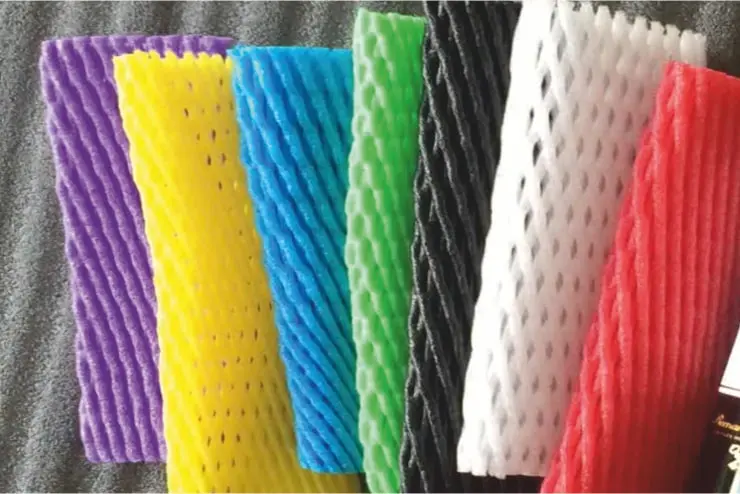
A foam net for fruit is a soft EPE (expanded polyethylene) sleeve that wraps each piece so fruit never touches fruit. That single trick stops most bruising in transit. It’s food-grade, reusable, runs from 50 to 100 mm, and costs a few rupees a meter, which makes it about the cheapest protection you can put on a mango, guava, apple, or pomegranate headed somewhere far.
Key Takeaways
- A foam net for fruit is an EPE sleeve that stops fruit-to-fruit bruising during handling and transit.
- Sizes run 50 to 100 mm. Match the diameter to just under the fruit’s waist.
- Single layer for firm fruit like apple and citrus. Double layer for soft fruit like mango and peach.
- Food-grade EPE is non-toxic and odorless. Get the food-contact paperwork before you buy.
- Guava is India’s highest-loss fruit at about 15%, much of it handling damage a net prevents.
- Price it by cost per protected fruit, not by the meter.
Let me tell you about the worst phone call in this trade. It’s the one where a buyer overseas cracks open a carton of your mangoes and finds brown thumbprints pressed into every second fruit.
Nobody dropped anything. The fruit just rode a thousand kilometers rubbing against itself, and that was plenty.
I’ve spent years getting Indian netting and packaging into the hands of fruit exporters, and I’ve watched that scene repeat across more than a dozen markets. Nearly every time, a foam net for fruit would have killed the problem before it started.
It’s a stretchy expanded polyethylene sleeve. Cheap as anything. You slip it over each piece and the fruit simply never meets its neighbor.
Why Fruit Gets Damaged Before It Ever Reaches the Shelf
Here’s what trips people up. They picture damage as something loud, like a dropped crate or a forklift tine through the side of a box.
Real damage is quiet. It’s the slow grind of fruit against fruit, hour after hour, on a road that’s never as smooth as the map promised.
Press two mangoes together for a day and the skin under the contact point browns. You won’t catch it at packing. The buyer catches it on arrival, and by then it’s your credit note, not theirs.
The Real Cost of Transit Bruising
The numbers here are ugly. A 2022 NABCONS study for the Ministry of Food Processing Industries put post-harvest fruit losses in India anywhere from 6% to 15%, crop depending.
Guava sits at the top of that pile, around 15%. Most of it leaks away during farm handling, before the fruit ever sees a buyer. On top of that, India loses an estimated 5% to 10% of its perishable food in transport alone.
Tally it and the country throws away roughly ₹1.53 trillion of produce a year. That’s close to 18 and a half billion dollars rotting in trucks and godowns.
Stage / Metric (NABCONS 2022) | Figure |
|---|---|
Fruit loss range, all fruits | ~6% to 15% |
Guava, highest-loss fruit | ~15% total |
Guava loss at farm operations | ~11.6% |
Guava loss at market level | ~3.5% |
Perishable food lost in transport alone | ~5% to 10% |
Total annual post-harvest crop loss | ~₹1.53 trillion (~USD 18.5 billion) |
A foam net for fruit can’t fix bad roads or a weak cold chain. What it fixes is the bruising from fruit hitting fruit, and that happens to be the most preventable loss on the whole list.
What a Foam Net for Fruit Actually Does
Strip the marketing away and the job is almost embarrassingly simple. The net puts a soft wall between every piece so they stop battering each other.
How EPE Foam Cushions and Ventilates
The material is expanded polyethylene. EPE, if you want the shorthand. Same foam that cradles wine bottles and laptops, just extruded into a loose, springy mesh instead of a solid sheet.
Two things make the mesh earn its keep. The give in the foam soaks up the jolt when a wheel finds a pothole. The gaps in the weave let the fruit breathe, so you’re not sealing in heat and sweat the way a plastic film does.
Pro Tip: In Indian summer heat, airflow beats padding. I’ve watched fruit survive a brutal road and then rot in a sealed bag because the moisture had nowhere to escape. The open weave of a foam net is doing work you can’t see.
| Protective Option | Cost | Weight Added | Reusable | Ventilation | Stops Fruit-to-Fruit Contact |
|---|---|---|---|---|---|
| EPE foam net | Low | Minimal | Yes | High | Yes |
| Cardboard trays | Medium | High | Limited | Low | Partial |
| Bubble wrap | Medium | Low | No | None | Yes |
| Molded pulp trays | Medium-high | High | Limited | Medium | Partial |
An EPE foam net barely adds any weight, costs less than trays or bubble wrap, and survives a few reuses. That combination is why most packers reach for it first.
Indonet manufactures food-grade EPE foam nets in 50 to 100 mm, rolls or pre-cut, built for Indian heat and long export hauls. Request a quote →
Matching the Net to the Fruit
Get the size wrong and the whole thing is pointless. Too big and the net slides off on the belt. Too tight and you wrestle it onto every piece and choke your line down to nothing.
Size Selector by Fruit Type
Foam nets run 50 to 100 mm across. Small firm fruit wants the low end. Papaya and tender coconut need the fat ones.
Net Diameter | Best-Fit Fruit | Layer |
|---|---|---|
50 mm | Small apple, kiwi, lemon, sapota | Single |
65 mm | Guava, orange, medium apple, pomegranate | Single |
80 mm | Large apple, mango, peach | Single or double |
90 mm | Large mango, small papaya | Double |
100 mm | Papaya, tender coconut, melon | Double |
Pro Tip: Size to just under the fruit’s waist, never its widest point. A 65 mm net on an Allahabad guava grips like it was cut for that fruit. Bump up one size and it’ll spin loose before the carton’s even taped.
When You Need a Double Layer
Thin skin, double layer. That’s the rule, more or less.
Apples and oranges shrug off a single wrap. The soft ones, mango and peach and custard apple and dragon fruit, want two layers the moment you start stacking cartons or shipping long-haul. Our guide on how to choose the right foam net walks through it fruit by fruit.
Food-Grade and Export Compliance
I’ll be blunt about this one. The net touches food. So the net has to be food-safe, end of discussion.
What “Food-Grade EPE” Should Mean
Food-grade EPE is non-toxic, odorless, and won’t taint the fruit it hugs. Any supplier worth your time hands you the food-contact paperwork without you asking twice.
For exporters that paperwork isn’t a nicety. It’s FSSAI at home and whatever the destination wants at its border. Sort it before you ship, not after a container’s parked in customs running up demurrage.
Compliance Check | Why It Matters |
|---|---|
Food-contact safe | Direct skin contact with the fruit |
Non-toxic and odorless | No taint, no contamination |
Certification on request | Proof for buyers and auditors |
Recyclable EPE | Meets export sustainability demands |
Consistent thickness | Even protection across the batch |
Roll vs Pre-Cut, and What a Foam Net for Fruit Costs
Two calls drive your packing speed and your bill. Format first, then price.
Choosing Roll or Pre-Cut for Your Packing Line
It depends on how you pack. Rolls thread through a machine and get sliced to length as they feed. Pre-cut sleeves are ready to grab and slip on by hand.
Format | Best For | Packing Speed | Waste |
|---|---|---|---|
Roll, uncut | Automated / semi-automated lines | High at volume | Low, cut to need |
Pre-cut sleeve | Manual packing, small batches | Fast by hand | Slightly higher |
What Drives Foam Net Price
People ask me for the fruit foam net price like it’s one tidy figure. It never is.
Diameter moves it, because a fatter net is just more material on the roll. A second layer moves it. So do custom colors, roll length, and how big your order is.
Price Factor | Effect on Price |
|---|---|
Diameter | Bigger size, more material, higher cost |
Single vs double layer | Double layer costs more |
Color or printing | Custom colors add cost |
Roll length / order volume | Bulk drops the per-meter cost |
Customization | Non-standard sizes add setup cost |
In India you’ll usually see plain fruit nets priced at a few rupees a meter. For the exact 50 to 100 mm specs, our EPE foam net product page lists them out.
Pro Tip: Stop comparing nets by the meter. Compare them by the protected fruit. A net that costs a paisa more but saves you one rejected pallet has already paid for the entire roll.
Foam Net for Fruit in India
India ships mango, pomegranate, grapes, and banana to buyers who don’t forgive bruises. One brown patch and the lot gets marked down or sent straight back.
Why Indian Exporters of Mango, Guava and Pomegranate Rely on It
Remember that 15% guava number? A fat slice of it is handling, plain and simple. Fruit getting crushed against fruit on the way to the buyer.
A foam net for fruit is the cheapest thing standing between a clean consignment and a rejected one. It breathes through the heat, and it takes the beating of a mandi loading dock without giving up.
The Bottom Line on Foam Net for Fruit
None of this is complicated, which is the part that frustrates me. So much of the loss is avoidable for the price of a wrapper.
What to Get Right Before You Order
Match the diameter to your fruit. Double up for the soft stuff. Insist on food-grade material, and judge the price by the protected piece instead of the meter.
Get those right and a foam net for fruit stops being a line item and turns into the cheapest insurance on your dock. For anyone moving mango, guava, or pomegranate any real distance, that’s exactly where it earns back every rupee you spend on it.
Frequently Asked Questions
What Size Foam Net Do I Need for Fruit?
Pick a net diameter slightly smaller than the fruit’s mid-width. As a rough guide, 50 mm suits small apples and kiwi, 65 mm fits guava and oranges, 80 mm handles mangoes and large apples, and 90 to 100 mm covers papaya and tender coconut.
Are Foam Nets for Fruit Food-Safe?
Yes. Food-grade EPE foam nets are non-toxic, odorless, and safe against direct fruit contact. Get the food-contact documentation from your supplier before you order.
What’s the Difference Between Single-Layer and Double-Layer Foam Nets?
A single layer covers firm fruit like apples and citrus. A double layer adds cushioning for soft, thin-skinned fruit like mango and peach, and for anything stacked or shipped long-haul.
Can Foam Nets Be Used on Automated Packing Lines?
Yes. Uncut foam net rolls are built to feed through automated and semi-automated machinery and get cut to length on the fly. Check that the roll diameter matches your equipment before you commit to a bulk order.
How Much Does a Foam Net for Fruit Cost?
A foam net for fruit is one of the cheapest protective options going, per piece. The price rides on diameter, layer count, color, and volume, so judge suppliers on cost per protected fruit, not the headline rate per meter.
Which Fruits Can Foam Nets Be Used For?
Foam nets fit most round and oval fruit, including apple, mango, guava, pomegranate, orange, peach, papaya, kiwi, and dragon fruit. Match the diameter and layer count to the fruit in front of you.
Are Foam Nets Reusable and Recyclable?
Yes. EPE foam nets take several reuses for short-term storage, and recyclable EPE options exist for exporters who need to tick the sustainability box.

Dipesh Jani
Global Sales HeadMr. Jani is an international business strategist driving global expansion for Indonet Group. With 14 years of expertise in the polymer sector, he spearheads sales initiatives that connect high-performance geosynthetics and netting solutions to clients across 10+ countries.Dedicated to building meaningful partnerships, he addresses complex industry challenges by delivering reliable, engineered materials for specific project needs. His leadership in export development and market strategy ensures global clients receive trusted solutions that enhance project integrity and collaborative success in the international marketplace.