|
Getting your Trinity Audio player ready...
|
Table of Contents
- 1 Geotextile Fabric for Waterproofing: Table of Contents
- 2 What are Geotextiles?
- 3 Why Use Geotextiles for Waterproofing: Benefits
- 4 Key Applications of Geotextiles in Waterproofing Projects
- 5 Types of Geotextile for Waterproofing: Which One Should You Choose?
- 6 Indonet: Your Reliable Provider of Geotextiles for Waterproofing
- 7 Geotextile Fabric for Waterproofing: FAQs
Water is the Public Enemy #1 for most construction projects and waste management projects.
If you don’t resist it through a durable waterproofing system, it can:
- Degrade subgrades and weaken surfaces.
- Corrode sensitive surfaces like roads.
- Reduce the structural integrity of drainage systems.
So, removing the threat of water via contamination, leaks, or clogs, is one of the biggest civil engineering challenges of our time!
That’s where geotextiles come in!
In this blog, I am going to walk you through everything you need to know about how geotextiles are used in waterproofing. We will:
- Explore its definition.
- Understand how it works.
- Discuss its waterproofing applications.
I’ve also included a concise table you can check out to identify which type of geotextile is right for your project.
Let us dive in!
Geotextile Fabric for Waterproofing: Table of Contents
- What are Geotextiles?
- Why Use Geotextile for Waterproofing: Benefits
- Key Applications of Geotextiles in Waterproofing Projects
- Types of Geotextile for Waterproofing: Which One Should You Choose?
- Indonet: Your Reliable Provider of Geotextiles for Waterproofing
- Geotextile Fabric for Waterproofing: FAQs
What are Geotextiles?
Geotextiles are permeable synthetic fabrics made of synthetic materials like polypropylene and polyester that we use to solve engineering problems within:
- Soil structures.
- Rocky environments.
- Volatile surfaces.
That is because its physical and chemical properties make it perfect for functions like:
- Filtertion
- Separation
- Drainage
- Reinforcement
- Permeability
It is due to the combination of these specific applications that geotextiles are perfect for waterproofing!
You can think of a layer of geotextile fabric as a special material that is used to make athletic and sportswear. Just like the clothes that athletes and sports professionals wear, geotextiles:
- Pull moisture away from a given surface.
- Prevent contact with other materials or objects.
- Maintain the integrity of the outer layer of clothing.
As you can see, geotextiles have that perfect blend of physical properties that can ensure waterproofing in various industrial and engineering applications!
Why Use Geotextiles for Waterproofing: Benefits
Using geotextile cloth and fabric offers 5 very important benefits that make it ideal for waterproofing:
1. Enhanced Filtration + Superior Drainage
The most important benefit of using geotextiles is that they let water pass through, while they trap the soil in one place.
This is down to permeability, a property inherent in geotextiles.
Think of it like a coffee filter for a given layer of soil. It will let the water fall through, while leaving the coffee behind.
As a result:
- The subgrade remains free of moisture.
- While the drainage system itself remains unclogged.
Plus, using geotextile sheets for waterproofing is also an upgrade on traditionally used methods like gravel, which can lead to clogging-related problems!
2. Robust Protection for Waterproofing Membranes
Next, we get to the part where your geotextile cloth actually “waterproofs” a surface.
Here’s how it works:
The primary waterproof liner, often in the form of a geomembrane, uses a thin, flexible sheet for waterproofing a surface from materials above and below.
This sheet is made of waterproof geotextile fabric!
It thus acts as a flexible cushion and a puncture-resistant barrier against other materials like:
- Sharp rocks.
- Construction debris.
- Subgrade irregularities.
You can think of it like a plastic tarp that can be laid down on rocky ground.
But a plastic tarp can puncture if it comes into contact with any of the materials we’ve stated above.
That’s where geotextiles are different. It goes between the rough ground and the delicate liner.
Here, it can absorb:
- Pressure
- Punctures
- Abrasions
So, with the right waterproof geotextile fabric from a quality provider, you can ensure that your liner stays intact for decades!
3. Effective Separation for Soil Layers
Traditionally, construction sites are fitted out with stone drainage layers on top of soft native soil.
But, gravel and stone layers lack a separator material.
And with the constant vibration or heavy loads, these stones might push down, while the soil layer pushes up in the opposite direction.
And what you are left with is a muddy mess!
That’s where a sheet of geotextile cloth becomes very important for modern construction. It:
- Prevents the intermixing of dissimilar soils and subgrades.
- Maintains the design thickness and performance of the drainage layer + the sub-base.
- Ensures long-term stability of the waterproofing system.
So, when you swap a geotextile layer for a gravel-based drainage, you get both a cost-effective and guaranteed solution for waterproofing surfaces!
4. Cost-Effectiveness and Long-Term Durability
As we have seen, waterproof geotextile material is made of synthetics like polyester.
As a result, it offers you a powerful combination of longevity and reduced maintenance costs.
Here’s how:
- Geotextiles lower lifecycle costs by reducing the need for repairs.
- They are also easier to install and maintain.
- Geotextiles are more resistant to chemicals, rot, and UV exposure.
Plus, geotextile fabrics offer you protection against three major causes of waterproofing failure:
- Clogging.
- Puncture.
- Instability.
So, you can eliminate the enormous cost of repairing a failed system years later, not to mention the disruption of excavating an already-constructed structure!
Key Applications of Geotextiles in Waterproofing Projects
Next, let me quickly walk you through the 5 most common and useful waterproofing applications of geotextiles:
1. Rooftop Gardens & Terraces
Geotextile layers perform two roles in rooftop gardens and terraces:
- A filter.
- A protective spacer.
It is usually installed above a waterproofing membrane.
This protects the membrane from the drainage layer and the sharp edges of root barriers.
Thus, the geotextile layer prevents the fine soil from clogging the drainage system!
2. Artificial Lakes, Ponds, and Canals
Geotextile layers are most commonly used to line canals, ponds, and artificial lakes.
Here, they are placed atop the excavated soil to prevent damage from:
- Stones
- Roots
- Sharp objects
You can also use a second geotextile on top of the liner to protect it from backfill or rock armouring!
With this sandwich of geotextile layers, you can make sure that your liner lasts for decades without a single leak.
3. Basement and Waterproofing Foundations
Geotextile is one of the best materials you can use for basement waterproofing.
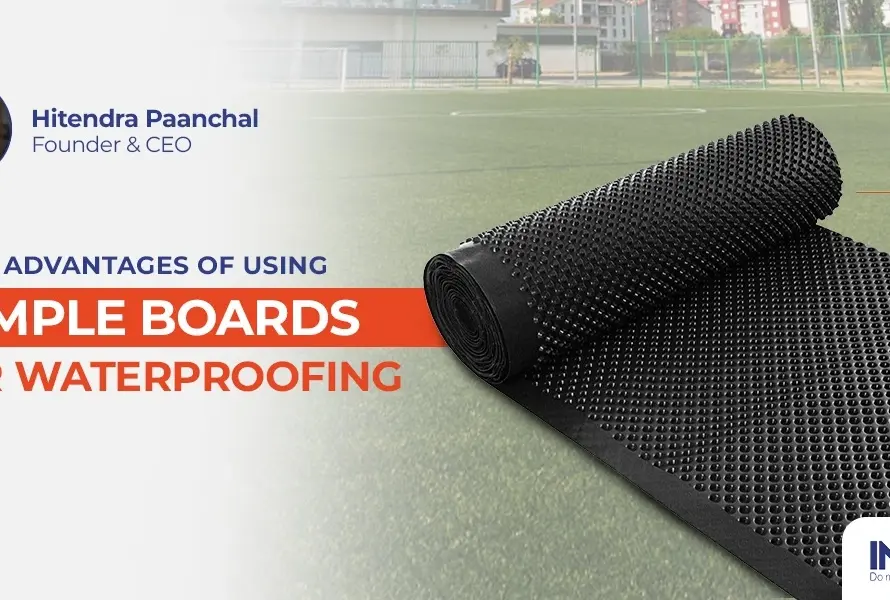
For this application, it is typically used with a dimple board against a foundation wall.
Here’s how it works:
- The geotextile layer filters out soil particles from the groundwater.
- It allows the clean water to enter the drainage board’s channels.
- The clean water is directed to the weep tiles.
You can use this mechanism to relieve hydrostatic pressure on the foundation wall and protect your basement from exposure to moisture!
4. Landfills Liners & Caps
Geotextiles are critical to landfill liners and caps.
That’s because landfills use a system that consists of two composite liners:
- A clay layer.
- A geomembrane.
And this system uses geotextile membranes both above and below the geomembrane:
- Beneath the membrane, it cushions the structure from compacted clay and stones.
- Above, it protects the waterproofing system from harsh waste.
So, its primary job is to make sure that the delicate geomembrane is never compromised, preventing leachate from contaminating groundwater!
5. Road & Pavement Sub-Surface Drainage
Civil engineers recognise water as the #1 enemy of roads.
And geotextiles help you fight this enemy alongside a system of pipes or a part of the sub-base layer to act as a long-term filter.
It does both of these by:
- Allowing water from the road base to enter the drainage system.
- Preventing finer soils from migrating and causing a log.
So, by keeping the base of the road dry, geotextiles prevent:
- Softening.
- Potholes.
- Frost heave.
This is why more and more road construction projects are using geotextiles to increase their projected lifecycles!
Types of Geotextile for Waterproofing: Which One Should You Choose?
When it comes to waterproofing, you can choose from three different types of geotextile fabrics:
Feature | Woven Geotextile | Non-Woven Geotextile | Knitted Geotextile |
Key Property | Very High Tensile Strength | High Permeability & Cushioning | High Flexibility |
Permeability | Low to Medium | Very High | Medium to High |
Best For | Subgrade stabilization under heavy loads | Protecting geomembranes (ponds, landfills), green roof drainage | Slope stabilization |
Indonet: Your Reliable Provider of Geotextiles for Waterproofing
If you are working on a civil engineering project and need a reliable material for waterproofing, geotextile fabric is probably the best solution on the market.
As we have seen, it offers a very good combination of cost-effectiveness, long durability, and complete protection from a wide range of materials due to its synthetic build.
Now, the only question is: where can you get a quality supply of geotextiles for waterproofing?
That’s where we at the Indonet Group come in!
We have been providing reliable geosynthetic solutions to a wide range of clients across different industries for nearly 2 decades.
Plus, we can create customized composite geosynthetic that aligns closely with the needs of your waterproofing system.
So, reach out to us, tell us about your project, and we will equip you with the most suitable geotextile fabric solutions for waterproofing!
Geotextile Fabric for Waterproofing: FAQs
1. What is the difference between geotextile and geomembrane for waterproofing?
The main difference is between their purpose and applications:
- A geomembrane is a barrier. It will prevent water from entering or leaving an area.
- A geotextile is a fabric or cloth. It protects, filters, and drains water away from a structure.
2. How to choose between woven and non-woven geotextile for waterproofing?
It depends on what you want to waterproof. For example:
- For liners, I recommend a layer of non-woven geotextile.
- Wovens are best for reinforcing soil under heavy loads.
- Use dimple boards for waterproofing basements.
3. What key property (GSM) should I look for in a waterproofing geotextile?
This depends on what you are waterproofing:
- For simple applications, less than 250 GSM will do.
- More complex projects (landfills, roads, etc.) need at least 500 GSM.
My suggestion: reach out to a reliable geotextile provider like Indonet. They will understand your needs and tell you which material is right for your project.

Hitendra Panchal
Founder & CEO Mr. Panchal is on a mission to revolutionize India's plastics landscape. Under his leadership, Indonet delivers essential solutions that fortify infrastructure, construction, and agriculture projects. Since 2007, he has built a manufacturing powerhouse specializing in high-performance geosynthetics and extruded netting. A champion of the "Make in India" initiative, he drives sustainable innovation to build resilient supply chains. Mr. Panchal empowers businesses to enhance project integrity and long-term value through world-class, engineered plastic solutions trusted globally.