|
Getting your Trinity Audio player ready...
|
Everyone loves scrolling online to buy new household items for decorating their interiors. But before you invest in another cool lamp, you might want to check your home’s foundation first.
Any cracks or deterioration of your foundation can soon turn your home into a sinking ship. One of the most common foundation issues that can lead to this is saline soil damage.
Fortunately, there is a solution. It includes applying a salt barrier to your home’s foundation.
In this guide, I will help you understand the severity of saline soil damage and how it can affect your property. This will help you combat this issue using modern foundational waterproofing techniques and salt barrier.
Let’s start by understanding the core problem.
What is Saline Soil Damage?
Table of Contents
- 1 What is Saline Soil Damage?
- 2 Understanding the Importance of Salt Barriers
- 3 Key Foundation Waterproofing Solutions
- 4 Comparing Common Foundation Protection Methods
- 5 Conclusion: Building Foundations with the Right Protection
- 6 FAQs
- 6.1 1. What is a salt barrier, and how does it prevent foundation damage?
- 6.2 2. How is saline soil damage different from regular water damage?
- 6.3 3. Can soil improvement techniques replace the need for a salt barrier?
- 6.4 4. What materials are used as effective soil protection materials?
- 6.5 5. Is foundation waterproofing necessary in dry climates with salt in the soil?
To put it simply, saline soil is soil with a high concentration of soluble salts. Although salts are not alarming in nature, they can greatly affect the strength of your structure.
How? The soil salts are hygroscopic. This means they can absorb water, which can weaken your structure through chemical weathering.
Here is how you can expect this damage to occur:
- Salts in the soil absorb moisture and divert it towards your foundation
- As water evaporates, the salts remain stuck in your foundation material.
- They crystallize and form pores in your concrete and masonry.
- These crystals continue to expand, creating internal pressure. This causes the concrete surface to chip and weather.
- As your foundation slowly powders away, it weakens the structure.
Ignoring saline soil damage can prove devastating in the long run. It can cause severe rotting and weathering, resulting in significant repair costs.
Understanding the Importance of Salt Barriers
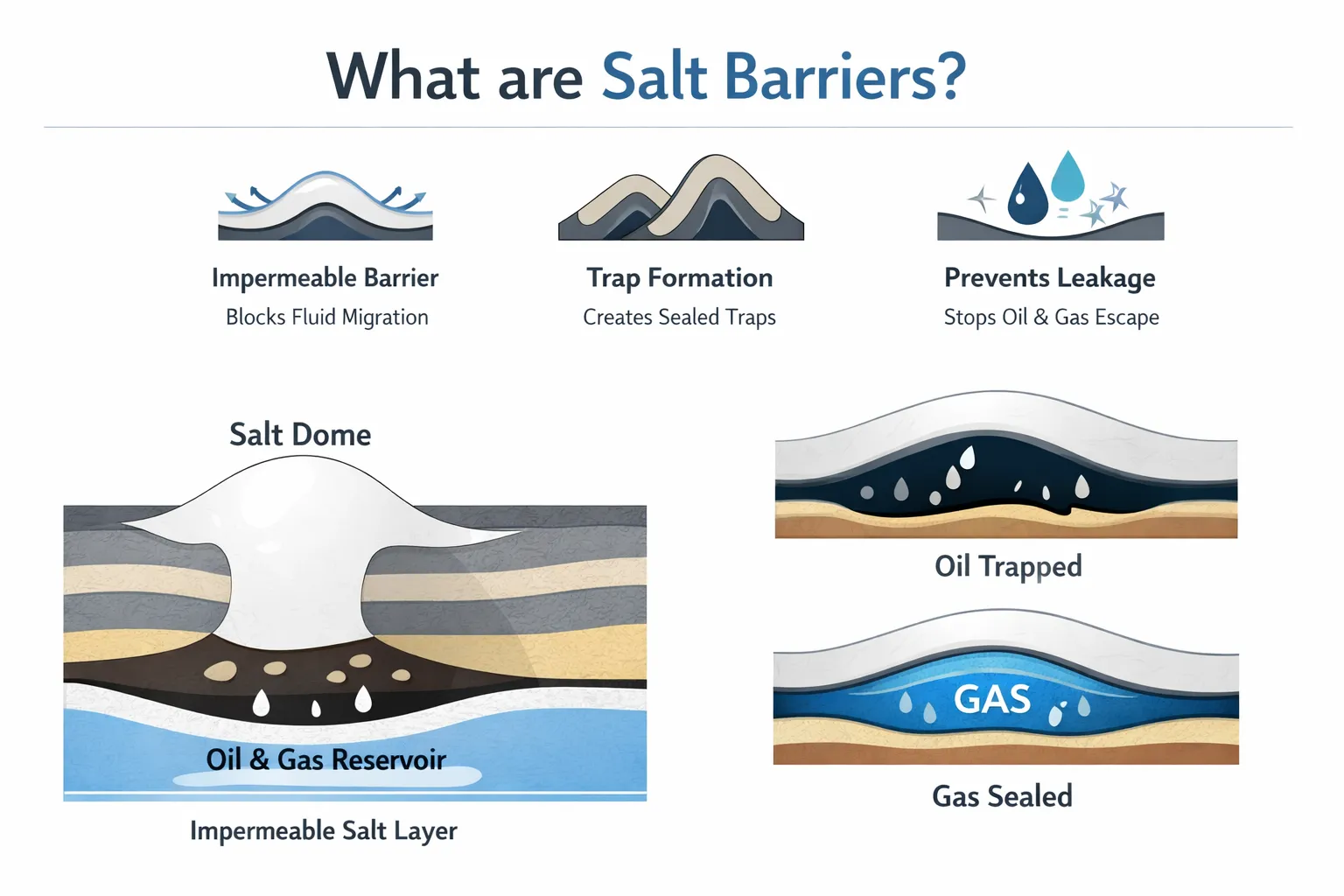
So how can a salt barrier protect your foundation against this invisible enemy?
In essence, it acts as a protective layer installed in the foundation to avoid ground salts from corroding the concrete. It is a shield that prevents salty water from ever reaching your foundation.
Such salt barriers are a critical component of modern foundation waterproofing solutions. This is because they can protect against the chemical threat of salt that standard waterproofing might miss.
While normal standardised membranes might keep the liquid water out, salt barriers go a step further. They prevent the transmission of salts to the foundation, which can lead to chemical degradation.
Key Foundation Waterproofing Solutions
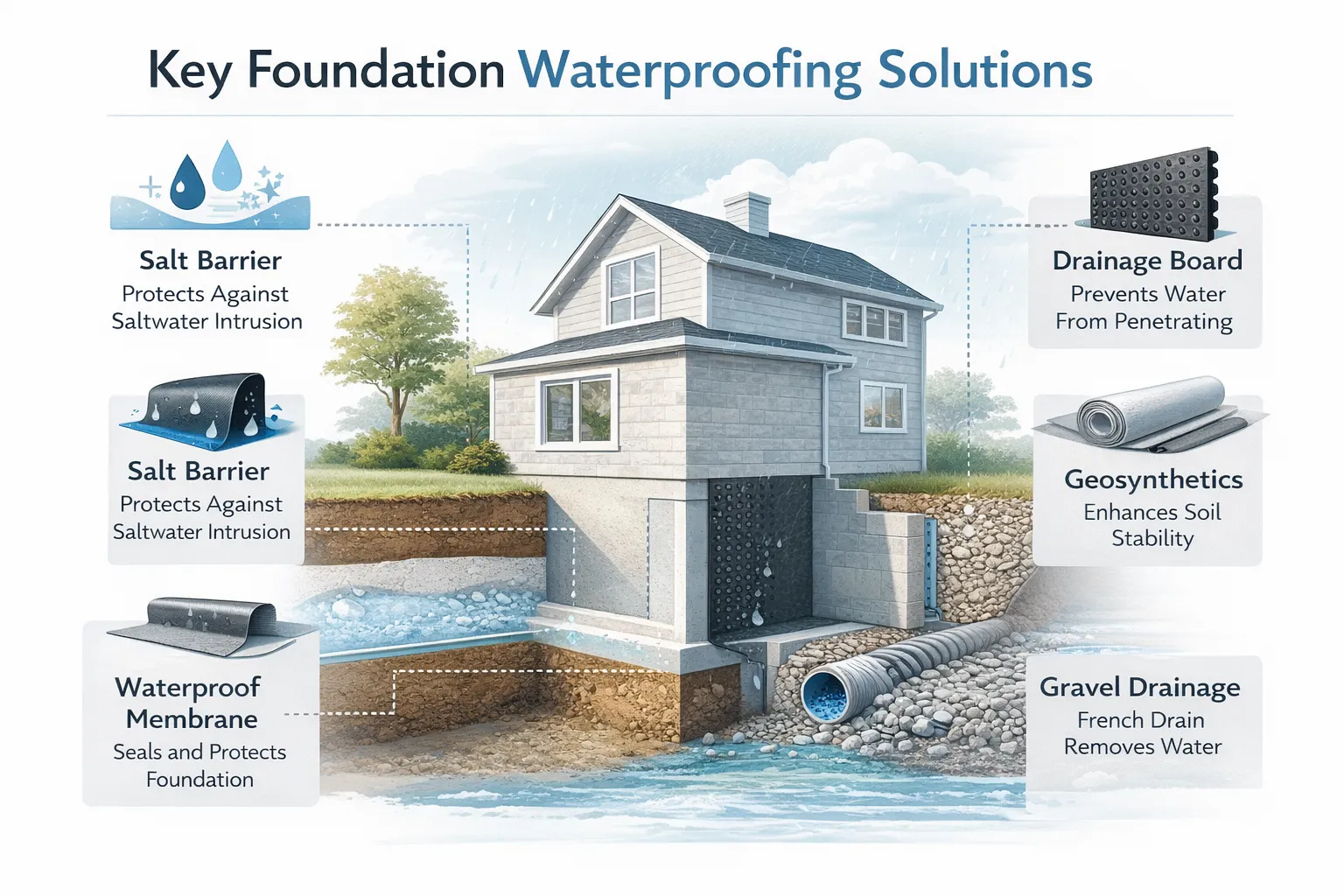
If you are dealing with aggressive soil conditions, a multi-layered approach is best. This requires multiple methods to provide better overall protection for your structure.
Here are the strategies you can use for soil improvement techniques:
Physical Vapor and Salt Barriers
Installing salt barriers for foundation waterproofing is a great way to make your house more durable. It involves placing an impermeable layer of high-quality plastic or membrane against your foundation wall.
Using this solution, you can prevent capillary action that can lead to moisture and salt ruining your foundation.
Utilizing Soil Protection Materials
Geonet geosynthetics and engineered geocomposite materials are often used to stabilize the ground beneath structures. By combining them with drainage solutions, you can also manage groundwater movement.
Such methods can greatly reduce the salt concentration in your foundation.
Soil Improvement Techniques
In many cases, soil improvement techniques are used even before a structure’s construction begins.
These involve:
- Replacement
Excavating the top layers of saline soil and replacing it with clean fill material.
- Leaching
Flushing out the soil with low-salt water to wash any salt from the foundation’s zone.
Combining these methods with salt barriers is an effective way to provide long-term protection.
Comparing Common Foundation Protection Methods
Here is how using these methods together can help increase your protection:
Method | Primary Function | Best For |
Salt Barriers (Membranes) | Blocking salt migration physically | New construction, slab foundations |
Drainage Systems | Managing water flow | All foundations |
Chemical Waterproofing | Sealing against liquid water | Existing foundations, retaining walls |
Soil Improvement | Changing the soil’s composition | Large sites, pre-construction |
Conclusion: Building Foundations with the Right Protection
The only way to ensure your house or structure lasts a long time is to protect your foundation. This means you need to learn more about the dangers of saline soil and how to protect your foundation from it.
If you want a strong foundation, you need resilient salt barriers. You may also need to combine it with other systems, like geosynthetic materials.
When it comes to finding the best solutions, I recommend choosing Indonet. They are one of the best producers of protective solutions for construction worldwide.
Indonet has spent years perfecting its sustainable solutions to make construction projects more durable. They are known for their expert assistance and dedication to high-quality products.
To receive industry-leading soil protection materials, I recommend choosing Indonet for your expert needs. Their client-focused approach can provide you with the partnership your foundations truly deserve.
Contact the experts at Indonet today and build a smarter, more effective foundation waterproofing system against salt and other contaminants.
FAQs
1. What is a salt barrier, and how does it prevent foundation damage?
A salt barrier is a physical membrane, often a durable plastic film, installed beneath or against a foundation. It prevents soil salts from migrating into the concrete through groundwater. By blocking this movement, it stops the chemical reaction that leads to spalling and weakening, making it an essential part of modern foundation waterproofing solutions.
2. How is saline soil damage different from regular water damage?
While water damage involves erosion or leaks, saline soil damage is a chemical process. Soil salts absorb moisture and crystallize within the concrete’s pores. As these crystals expand, they create internal pressure that causes the material to crack and flake from the inside out. Standard waterproofing stops liquid water, but a dedicated salt barrier stops this chemical attack.
3. Can soil improvement techniques replace the need for a salt barrier?
Soil improvement techniques can greatly reduce immediate risks. However, salts can migrate back into treated areas over time. For this reason, soil improvement techniques are best used in conjunction with, rather than as a replacement for, a physical salt barrier to ensure long-term, foolproof protection.
4. What materials are used as effective soil protection materials?
High-quality soil protection materials for this purpose include impermeable membranes like high-density polyethylene (HDPE) or reinforced polypropylene films. These are favored because they are durable, chemically resistant, and provide a continuous barrier against moisture and salt transmission.
5. Is foundation waterproofing necessary in dry climates with salt in the soil?
Absolutely. In fact, it is critical. In dry climates, salts can accumulate in the soil due to high evaporation rates. When rare rains or irrigation occur, the salts dissolve and are drawn toward the dry concrete. Therefore, foundation waterproofing that includes a salt barrier is vital in arid and coastal regions alike to prevent structural decay.