|
Getting your Trinity Audio player ready...
|
Table of Contents
If you come across a road that is currently under construction, there is a very high chance that it is using geotextiles for stability!
But that is just the most common application of geotextiles.
On top of construction, geotextiles are widely used across a range of industries, from waste management to railway engineering.
In this blog post, we will discuss 5 of the most important geotextile applications in 2026.
I will tell you what makes geotextiles ideal for these applications and where they are used in specific industries.
I have also included a table to help you quickly glance through the different geotextiles you can use for your projects.
Let us dive in!
Top 5 Applications of Geotextiles: Table of Contents
- What are Geotextiles?
- Different Types of Geotextiles: A Quick Look
- The Top Geotextiles Applications in 2026
- Indonet: Your Reliable Geotextiles Provider
- Applications of Geotextiles: FAQs
What are Geotextiles?
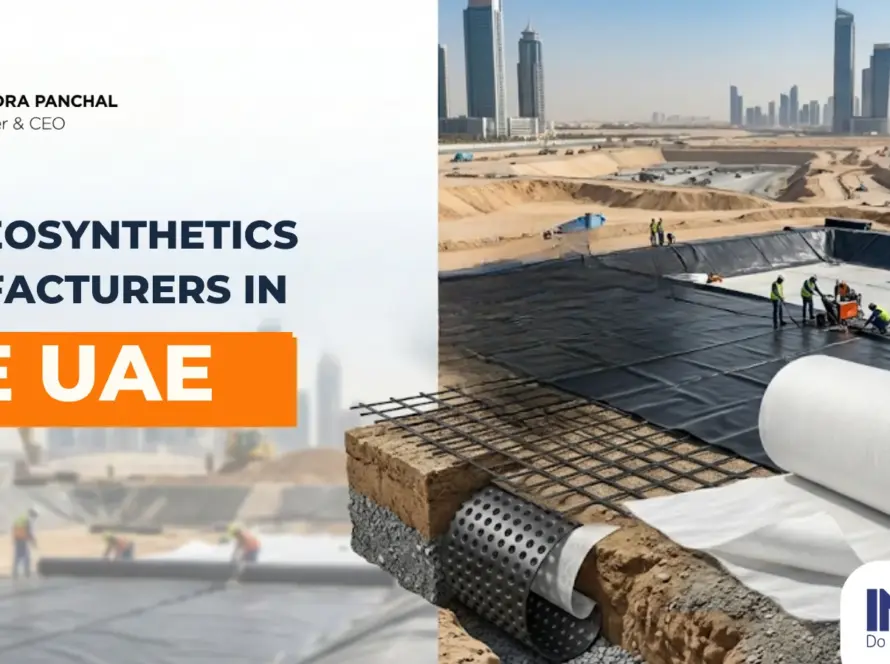
Geotextiles are synthetic fabrics made from two materials: polypropylene or polyester.
They are permeable, offer excellent mechanical strength, and can even stretch to withstand pressure.
So, you can use them on a soil surface or in a structure, and they will help you:
- Separate different layers within a surface.
- Filter water or other undesirable substances (like gas or chemicals).
- Drain fields or landfills.
- Reinforce walls or surfaces.
- Control the erosion of soil on slopes.
The ability of geotextiles to perform these functions makes them one of the most important materials in civil engineering.
Geotextiles: A Brief History
Geotextiles are a fairly modern scientific development: their usage as synthetic materials began only as late as the 1950s. However, we have been using geotextile-like materials for centuries. For example, we have used jute and hemp to reinforce roads for hundreds of years.
The difference between the natural, organic vs synthetic, inorganic substances is that the latter offer a far greater degree of durability and strength.
Different Types of Geotextiles: A Quick Look
Before we explore the top uses of geotextiles, check out this table to find out which geotextile fabrics you can use:
Type of Geotextile | Key Properties | Ideal Application |
Woven | High tensile strength, low elongation (it can resist stretching). | Separation + reinforcement in road construction & railway tracks. |
Non-Woven | Felt-like and high permeability (eg. water flow). | Filtration, drainage, and controlling erosion. |
Knitted | High strength + high permeability. | Reinforcement and erosion control where both strength and drainage are critical. |
The Top Geotextiles Applications in 2026
Finally, let us go through the most important uses of geotextiles:
1. Geotextiles in Road Construction
The no. 1 application of geotextiles is in road construction.
For example, you will find that more than most contemporary road construction projects involve the use of geotextiles!
And not just any geotextile: woven geotextiles.
Why?
Because they help us separate a weaker section of the surface from a stronger course (typically made by an aggregate substance).
Without woven geotextiles in construction, roads would wear out way more quickly because of the inconsistency in the surface strength.
We can thus maintain the structural integrity of the road and increase its service life.
Check out how our Coir Geotextile range can help you construct roads that can last generations!
2. Geotextiles for Drainage Systems
As we have discussed in the previous section, non-woven geotextiles can offer excellent permeability.
This makes them perfect for any applications that involve filtration, such as:
- In drainage pipes.
- Behind retaining walls.
- In trenches.
In these cases, they act as filters that allow water to pass while separating soil particles with high efficiency.
As a result, you can prevent problems like clogging and ensure that your drainage system remains durable for a long time!
3. Geotextiles for Erosion Control
Geotextiles offer strong erosion control because they can hold a surface together against pressure and force.
While non-woven geotextiles are ideally suited to erosion control, you can also use knitted or woven geotextiles to strengthen or stabilise a surface.
So, where exactly are geotextiles used for erosion control?
In two places: slopes and shorelines.
They are added as a layer on top of the soil or the surface, where the geotextile layer protects the surface from being washed away by rain or waves.
Plus, geotextiles also promote the growth of vegetation. This adds another layer of natural protection and erosion control!
4. Geotextiles for Railway Track Bed Stabilization
We have already seen that geotextiles are perfect for adding strength to surfaces.
And geotextiles don’t have natural strength in themselves. Rather, they help you stabilise an already existing surface by holding it together.
As a result, while engineers are using geotextiles in construction, they are also adding them to railway tracks!
They usually place a layer of woven geotextiles between the subsoil and the track ballast.
So, the geotextile layer stops the fine soil particles from being displaced onto the railway track itself.
As a result, the track maintenance cost reduces, the drainage improves, and we get a more stable foundation for railway cars themselves!
5. Geotextiles for Landfills & Environmental Protection
The last application of geotextiles on our list is landfill and environmental protection.
This application stems from the fact that they are excellent at both protection and filtration.
But unlike the other uses of geotextiles, this use involves more than one geosynthetic material.
For instance, civil engineers add a layer of geotextiles to geomembrane linings. This protects the latter from being punctured by sharp objects that might end up in landfills!
So, geotextiles still perform one of their primary functions – strengthening a surface. But in this case, the surface they are protecting is another geotextile!
Plus, you can also use them as a filter layer to collect leach and ensure safe containment and management of harmful chemicals.
Indonet: Your Reliable Geotextiles Provider
In this post, we have explored the most important applications of geotextiles.
We saw how they strengthen surfaces in construction, promote filtration of fine particles, and even prevent soil erosion.
So, if you think that using geotextiles can help you solve your engineering challenge, all you have to do is connect with a reliable geotextile provider.
And that is where we at Indonet can help you!
We work with market leaders across a wide range of industries to help them find the right geosynthetic solution to their engineering projects.
Reach out to us, tell us about your undertaking, and we will help you find the right geotextile on which you can build the foundation of success!
Applications of Geotextiles: FAQs
1. What is the primary function of a geotextile?
There are five primary functions of geotextiles:
- Separation.
- Filtration.
- Reinforcement.
- Drainage.
- Stabilisation.
2. Which geotextile is best for drainage?
I recommend using non-woven geotextiles for drainage because they will give you the high permeability you will need while also separating fine soil particles.
3. Are geotextiles eco-friendly?
Absolutely, they promote sustainability by extending the lifespan of engineering projects and reducing material use. However, they are by design inorganic materials. That means they are not biodegradable.

Hitendra Panchal
Founder & CEO Mr. Panchal is on a mission to revolutionize India's plastics landscape. Under his leadership, Indonet delivers essential solutions that fortify infrastructure, construction, and agriculture projects. Since 2007, he has built a manufacturing powerhouse specializing in high-performance geosynthetics and extruded netting. A champion of the "Make in India" initiative, he drives sustainable innovation to build resilient supply chains. Mr. Panchal empowers businesses to enhance project integrity and long-term value through world-class, engineered plastic solutions trusted globally.