|
Getting your Trinity Audio player ready...
|
Table of Contents
- 1 Quick Overview on Types of Geosynthetics
- 2 Types of Geosynthetics in Road Construction: Benefits & Uses
- 3 Conclusion
- 4 FAQs
- 4.1 1. What are the main types of geosynthetics used in road construction?
- 4.2 2. What is the difference between a geotextile and a geogrid for roads?
- 4.3 3. When should I use geocells in road construction?
- 4.4 4. What are the key benefits of using geosynthetics in highways?
- 4.5 5. Why choose a woven geotextile for my road project?
Every road you see while driving is constantly struggling to support heavy vehicle loads. They suffer from weak shifting soil beneath and water trying to wash away their foundation.
For decades, construction companies relied on expensive aggregate to protect the road’s integrity. But replacing vast amounts of soil with this aggregate is not efficient.
Thankfully, there is a smarter way. It involves using modern geosynthetics in road construction to provide a more reliable road foundation.
Curious about how they work? These are mainly polymer products used to strengthen roads. They act as a durable layer to prevent potholes and road degradation.
In the guide below, we will dive deeper into these geosynthetics. I will also convey their types and functions in road construction for better understanding.
Let’s begin with a quick overview of geosynthetics in road construction:
Quick Overview on Types of Geosynthetics
Each type of road construction geosynthetics differs from the others. Here is a handy table that summarizes them:
Type of Geosynthetic | Primary Function(s) | How It Helps the Road | Key Benefit |
Geotextile (Woven) | Separation, Stabilization, Filtration | Acts as a strong barrier, keeping the soil base and gravel apart. | Prevents potholes and rutting, reducing grave costs. |
Geogrid | Reinforcement, Stabilization | Locks gravel in place, spreading heavy truck loads over a wider area. | Enables construction on soft soils; allows for a thinner, stronger road structure. |
Geocell | Confinement, Load Distribution | Creates a rigid, honeycomb-like mattress that confines infill material on all sides. | Exceptional for the weakest soils; provides superior load support with less material. |
Geocomposite | Drainage, Filtration | Combines materials to manage water flow. | Protects the road base from water damage through drainage. |
Types of Geosynthetics in Road Construction: Benefits & Uses
Below is a more in-depth look at geosynthetics in road construction:
1. Geotextiles
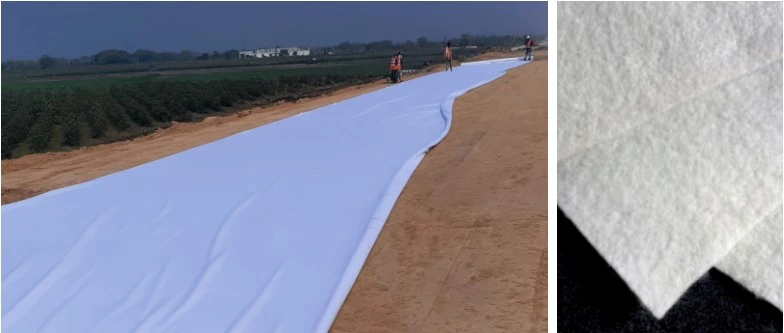
Geotextiles are high-tech fabrics used to provide strength and separation.
A woven geotextile for road construction is typically used to improve the durability of its structure. Moreover, it also provides separation between the top gravel and the soft soil beneath. This prevents the two layers from mixing, reducing the risk of potholes and degradation.
Also, geotextile fabrics help in stabilizing the road’s foundation. Today, woven geotextile for road construction is typically the first layer placed on the soil, which is essential for improving the bearing capacity of soil. This prevents vehicle loads and even water from permanently damaging highways and roads.
2. Geogrid
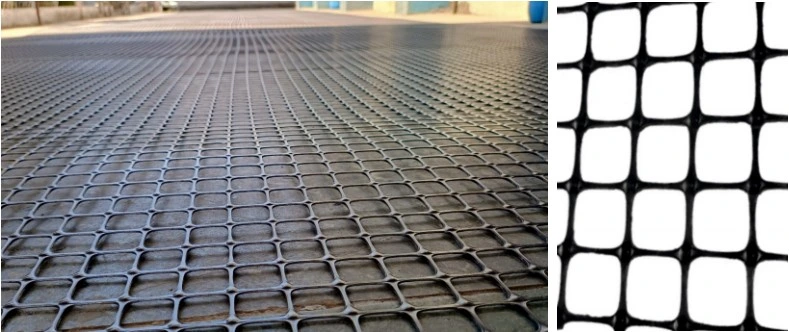
Geogrids are synthetic layers with a grid-like structure. They help provide a stiff platform when placed on soil or gravel.
The spaces between the grid interlock with the surface beneath, creating a strong platform above. This helps PP geogrids in distributing the vehicle load evenly across the road’s surface.
Geogrid’s “load distribution” benefit is often used for building roads on soft ground. With its strength, haul roads for construction sites and access roads become more resilient. Since it’s just a thin geosynthetic layer, it also reduces the road’s thickness and cost.
3. Geocell
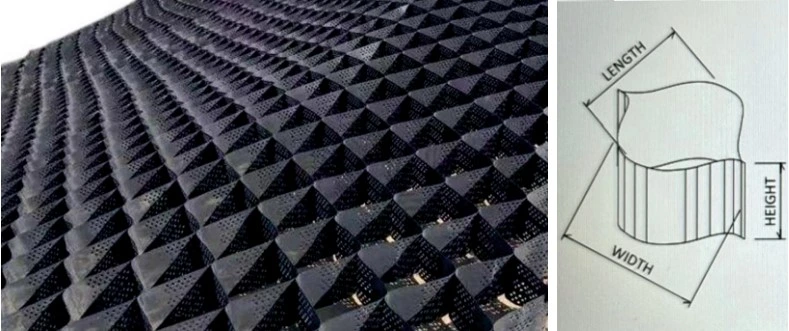
Geocells are honeycomb-like structures made for use in extremely difficult soil conditions.
Made of durable HDPE, the spaces beneath the geocells are filled with gravel or soil. This makes them rigid and prevents shifting when it’s under pressure.
Key advantages of geocell road construction include providing a stable layer for load distribution. When geogrids require two or three layers for efficient use, only one layer of geocell is needed to achieve the same strength.
Geocells are envisioned as modernized geogrids, which are more resilient in base soil layers. They are good at protecting slopes and highways and at controlling erosion on sloped roads.
4. Geocomposite
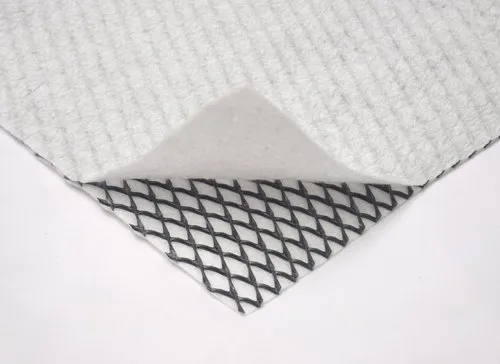
The main purpose of using geocomposites is to manage water.
As the monsoon arrives, roads begin to develop potholes. This is because the road’s base layer becomes waterlogged and weak.
Geocomposites help drain this water by creating a dedicated pathway for water to escape. As water pressure decreases, the roads stay dry and rigid even during rain.
You will often find geocomposites being used in such roadside drainage systems and even behind walls. They are a great way to manage water flow and prevent structural damage.
Conclusion
The use of geosynthetics in roads is continually increasing. They help strengthen roads and protect them from environmental conditions.
To benefit from this, you need a committed supplier who can provide credible solutions in geosynthetics. This will ensure that your projects have easy access to high-quality materials.
Looking for such a dedicated geosynthetic expert? End your search today by choosing Indonet, a leading market expert. They manufacture a wide variety of geogrids, geocells, and geotextiles tailored to specific requirements.
Moreover, Indonet’s quality standards and durability remain unmatched. Even in challenging conditions, their geotextile for road construction performs reliably. Their legacy and strength are built on Indonet’s commitment to client satisfaction.
Ready to use geosynthetics in road construction on your next project? Contact Indonet today and let their experts guide you to success!
FAQs
1. What are the main types of geosynthetics used in road construction?
The main types of geosynthetics in road construction are geotextiles, geogrids, geocells, and geocomposites. Each serves a unique purpose, from separation and filtration to reinforcement and drainage, making them essential for building durable highways.
2. What is the difference between a geotextile and a geogrid for roads?
A geotextile for road construction (often woven) acts as a separator to prevent soil mixing. A geogrid for road construction provides reinforcement by locking aggregate in place to distribute loads. They are often used together for optimal stabilization.
3. When should I use geocells in road construction?
Geocell road construction techniques are best for stabilizing extremely weak or soft soils. The three-dimensional honeycomb structure provides superior confinement and load distribution, making it ideal for building embankments, slopes, and access roads over challenging ground.
4. What are the key benefits of using geosynthetics in highways?
The use of geosynthetics in road construction extends road life, reduces maintenance costs, allows construction on poor soils, and can reduce the amount of expensive aggregate needed. This makes road construction geosynthetics a cost-effective and sustainable choice.
5. Why choose a woven geotextile for my road project?
Woven geotextile for road construction offers high tensile strength, making it the top choice for separation and stabilization. It creates a stable platform that prevents the gravel base from mixing with the soft subsoil, which is fundamental to preventing potholes and rutting.