|
Getting your Trinity Audio player ready...
|
Modern construction relies on modern solutions to save time and labor.
Among these advanced materials are geocomposites. They are versatile materials engineered for maximum performance.
Geocomposites are composites of various geosynthetic materials. This allows a single integrated layer to inherit the merits of numerous synthetic materials.
In this guide, we will dive deeper into the benefits of these geocomposites for construction. This will help you understand the exact advantages of using a geocomposite.
Firstly, let’s understand what exactly a geocomposite is!
What is a Geocomposite?
Table of Contents
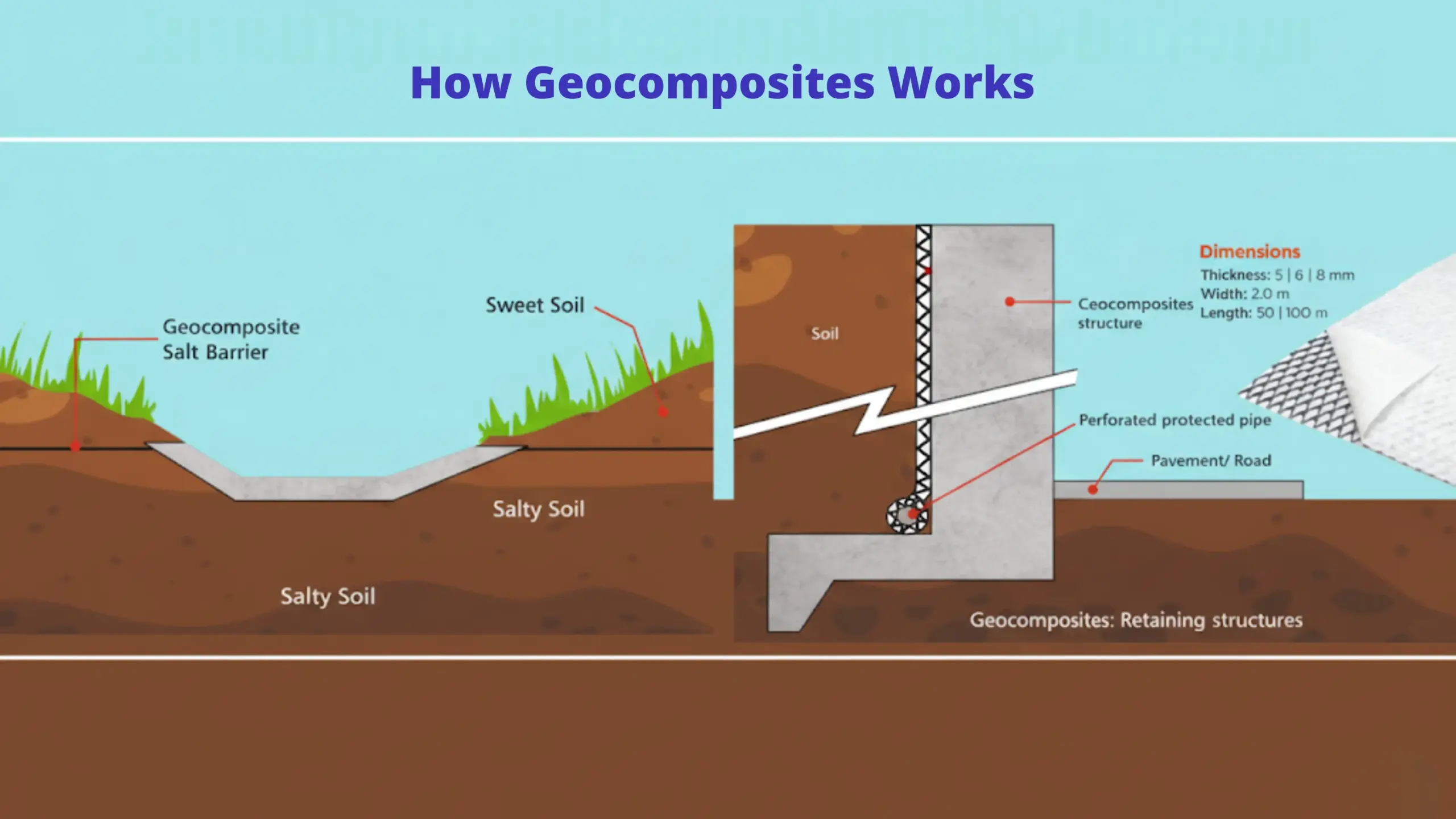
An easy explanation of geocomposites is that they are manufactured materials made up of two or more geosynthetic components. This allows it to have the ability of geotextiles, geonets, and geogrids put together. Geocomposites are thus an all-in-one geosynthetic solution for your civil engineering needs.
Curious about the most common type of geocomposites? The answer is geocomposite drains. These use the benefits of geocomposites to reduce water damage in structures.
Key Types and Common Applications of Geocomposites
Geocomposites are made to tackle many unique challenges. Here is a quick look at the most common ones:
Type of Geocomposite | Primary Components | Key Functions | Typical Applications |
Drainage Geocomposite | Geonet core + Geotextile filters | Drainage, Filtration, Separation | Landfill leachate systems, behind retaining walls, under road bases |
Prefabricated Vertical Drains (PVDs) | Plastic core + Filter sleeve | Vertical drainage, Soil consolidation | Accelerating the settlement of soft, saturated clay soils before construction |
Geocomposite Sheet/Board Drain | Dimpled plastic sheet + Geotextile | Drainage, Protection | Foundation walls, blind-side drainage, plaza decks, green roofs |
Geotextile-Geomembrane Composite | Geomembrane + Geotextile(s) | Containment, Protection, Drainage | Landfill liners & caps, tunnel waterproofing |
Geotextile-Geogrid Composite | Geogrid + Geotextile | Reinforcement, Drainage, Filtration | Reinforced soil slopes and walls requiring internal drainage |
Main Applications of Geocomposites
Below are the most popular applications of geocomposites used by builders and civil engineers:
Road Construction
Geocomposites are placed between soil and gravel to prevent their mixing. This adds stability and reliability to the road, as well as improved drainage.
Retaining Walls
Installing geocomposite wall drains behind walls helps prevent water-pressure-related damage.
Landfills & Containment
Using geocomposites is critical for collecting leachate and gas in industrial liners and cover systems.
Geocomposite Drains
A geocomposite drainage mat is often used to protect a structure against future waterlogging.
Top 5 Benefits of Using Geocomposites
Here are the best advantages of using geocomposites in your next project:
Multifunctional Efficiency
It combines several jobs like drainage, filtration, and reinforcement in one single sheet. This helps engineers simplify their design and leads to faster installations. The combined nature of geocomposites also prevents compatibility issues between separate layers.
Better Hydraulic Performance
Geocomposite sheet drains are designed to handle high water flows. They can be used to replace thick and expensive layers of gravel. In most cases, geocomposites also offer better drainage capabilities than other alternatives.
Cost and Time Savings
Installing geocomposistes is extremely easy. You just need to roll out a pre-cut light sheet to your specifications. This helps reduce logistical charges and saves on time, labor, and installation costs.
Proven Durability
Since geocomposite drainage layers are made of polymers like HDPE, they are highly durable. Its average lifetime is over 50 years! This material can even resist most chemical and biological degradation.
Enhanced Project Sustainability
Since it minimizes quarrying and aggregate transportation, geocomposites also lower your project’s carbon footprint. Many geocomposites even use recycled materials for a more positive environmental impact.
Best Installation Practices of Geocomposites
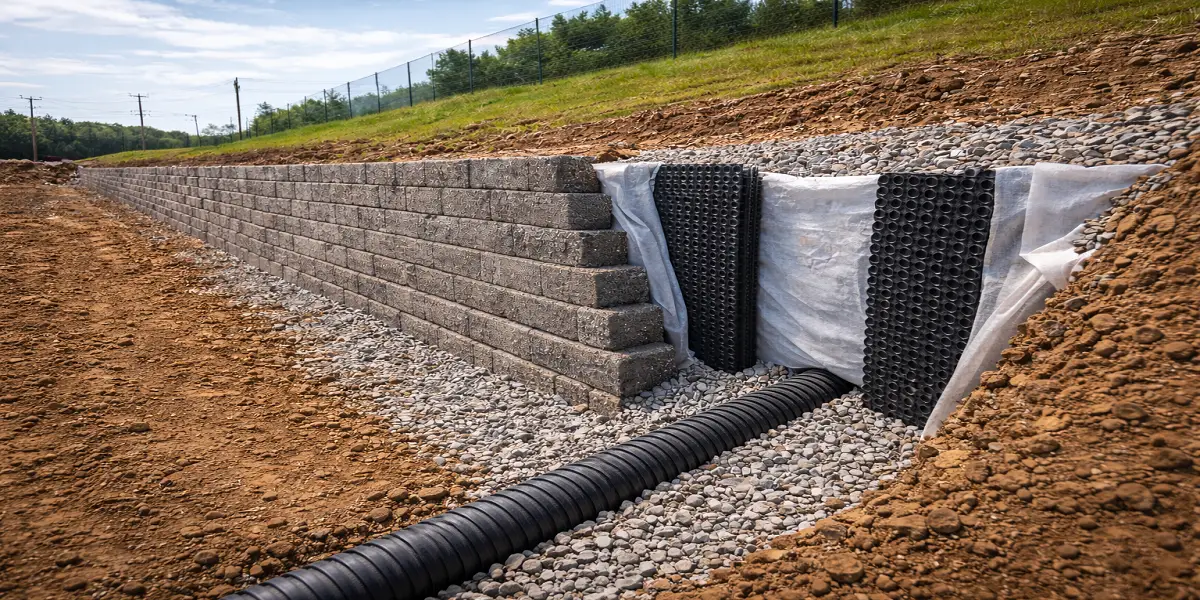
For builders and engineers, it is vital that geocomposites be installed correctly. Consider using the following actions:
Define its primary function
Before installing the geocomposite, ask what challenge you need it to solve. Is it drainage or reinforcement? Or maybe even containment? The answers to these questions will help you select the right composite type.
Analyze the site
After selecting the right type, analyze the site it will be placed in. Check the soil type, expected loads, and waterlogging challenges. This will help you install the geocompiste correctly and in the right position.
Check Key Specifications
Before installing, make sure you check your manufacturer’s test data as well. This will help you determine whether the geocomposite you are targeting can solve your issues. Consider the compressive strength and flow capacity of the geocomposite in question.
Follow Installation Steps
Ensure that your subgrade is clean and smooth. Roll out the geocomposite without forming any wrinkles. You also need to overlap seamlessly and protect the geocomposite against tearing.
Conclusion: Building With Confidence
Geocomposites are arguably the most complex form of geosynthetics available today. It represents a smarter way to solve complex civil engineering problems. Over the years, its abilities have made it a mainstay in modern infrastructure.
However, for achieving reliable results, you first need a dedicated partner. Only your supplier can ensure the best quality and expertise for your geocomposites.
For the needs of engineers and builders, I recommend using Indonet Group as your main supplier and partner. They have a wide range of geocomposite drainage layers to provide maximum efficiency.
Indonet’s technical team is extremely dedicated as well. They will provide cost-effective solutions to your specific problems for optimal results. Moreover, Indonet also has global partners, making them very accessible and experienced for overseas clients.
Ready to use geocomposites in your next project? Contact the Indonet team today and build a stronger future for your construction.
FAQs
1. What is a geocomposite?
A geocomposite is a smart building material. It combines two layers, like a drain core and a filter fabric, into one easy-to-install sheet. It’s mainly used for drainage and filtration in construction projects.
2. What is a geocomposite drain used for?
A geocomposite drain is used to move water away from structures. It works like a built-in drainage pipe inside a sheet. It is commonly used as a geocomposite drainage layer behind walls or under roads to keep them dry and stable.
3. When should I use a geocomposite wall drain?
You need a geocomposite wall drain when building a retaining wall or basement. Placed behind the wall, it catches groundwater and channels it to a drain, protecting the wall from water pressure and damage.
4. What’s the difference between a geocomposite sheet drain and a drainage mat?
A geocomposite sheet drain is a flat, panel-like drain. It’s often used against foundation walls or under concrete slabs. It provides a space for water to flow and includes a fabric filter to remove soil.
5. What are the main benefits of using geocomposites in construction?
Using geocomposites saves time and money. They replace thick layers of gravel, are lightweight, easy to install, and provide reliable, long-term drainage for roads, walls, and foundations.